
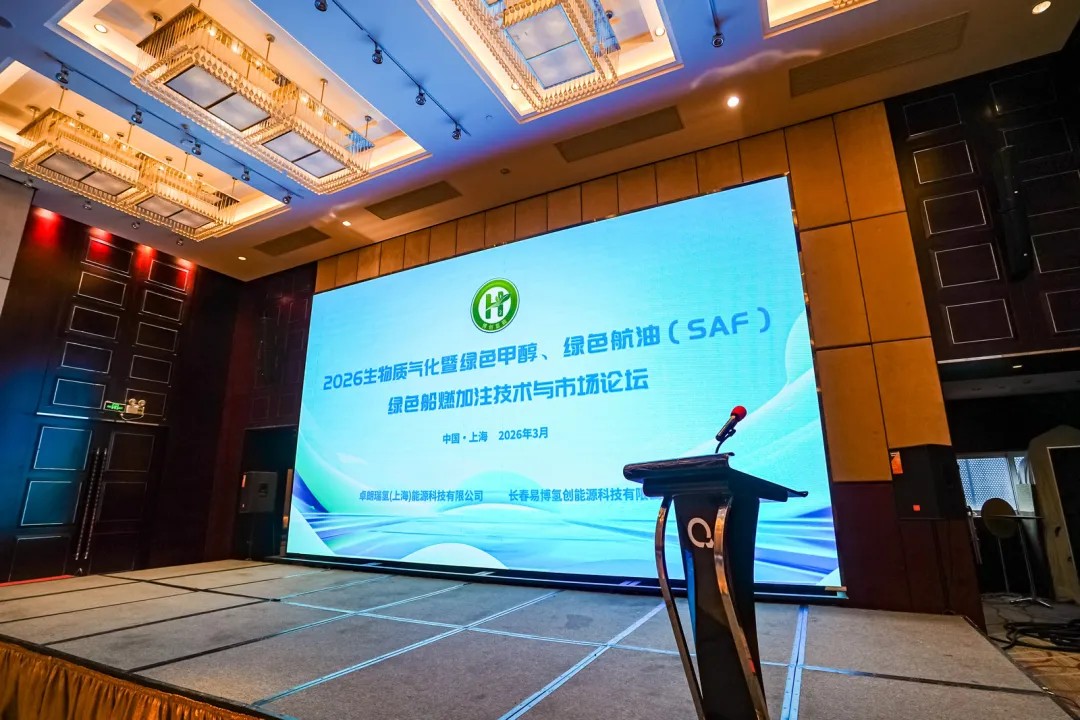
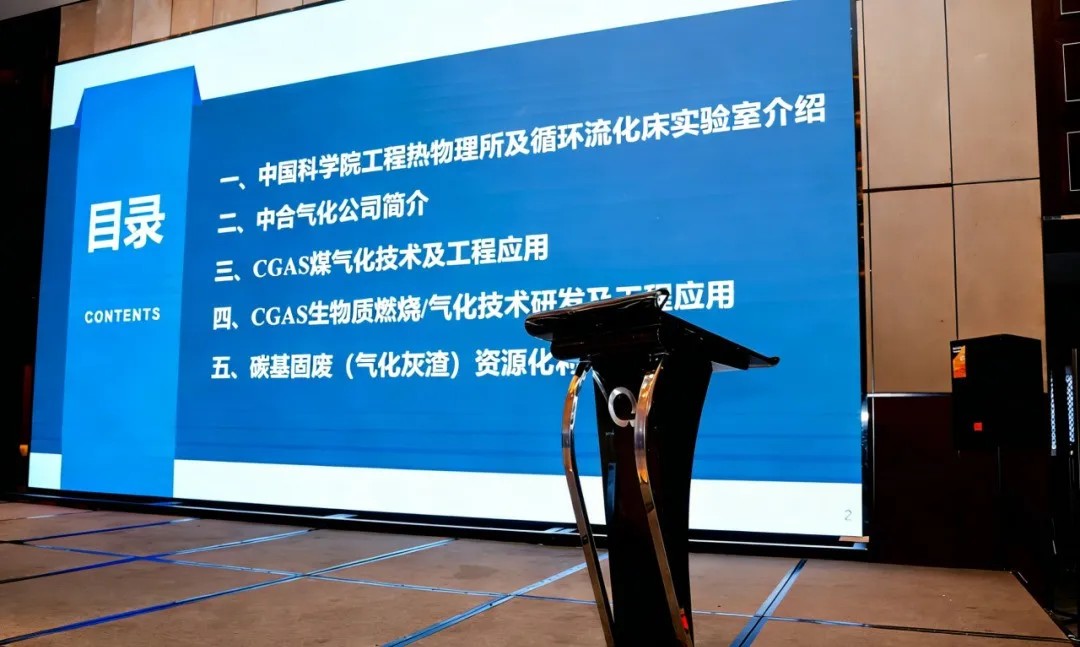
From March 25th to 27th, the "2026 Biomass Gasification, Green Methanol, Green Aviation Fuel (SAF), Green Marine Fuel Bunkering Technology and Market Forum," hosted by Bochuang Hydrogen Energy, was successfully held in Shanghai Pudong. Over 100 enterprises and more than 250 representatives from across the country gathered to engage in in-depth exchanges on core biomass gasification technologies, green fuel synthesis processes, large-scale production, and global market trends. ZHGAS was invited to attend and systematically shared the company's technological R&D achievements and engineering application practices in the field of biomass gasification.
Two Decades of Accumulation: Tackling Core Challenges in Biomass Gasification
Biomass gasification is a key step in producing green methanol, sustainable aviation fuel (SAF), and green marine fuel. However, biomass feedstock presents challenges such as significant compositional variation, fluctuating ash melting points, high alkali metal content, unique viscosity-temperature characteristics, and poor slurry-forming ability, making stable, efficient, and long-duration operation difficult with traditional technologies.
Since 2004, the Circulating Fluidized Bed Laboratory of the Institute of Engineering Thermophysics, Chinese Academy of Sciences, has been researching biomass circulating fluidized bed combustion technology, and in recent years has focused on breakthroughs in biomass gasification for syngas production. The R&D team has conducted fundamental characteristic studies and pilot tests on dozens of typical biomass feedstocks, including agricultural, forestry, and solid waste materials. They have established a 10-ton/day pilot test platform, accumulating over 1,000 hours of operation, and built a comprehensive database on biomass gasification characteristics.
Addressing industry pain points like significant feedstock fluctuations and poor operational stability, the R&D team innovatively proposed a "staged gasification" technical approach. Through the staged design of the reactor and gasifying agent, flexible control of furnace temperature distribution is achieved, enabling efficient gasification of different feedstocks. This technology can significantly reduce tar content in the gasification products, effectively solving a key bottleneck hindering the large-scale conversion and utilization of biomass.
Undertaking Gasification Island Construction for Guangdong Biomethanol Project
As the exclusive licensee and industrialization entity for atmospheric biomass circulating fluidized bed staged gasification technology, ZHGAS has successfully advanced this technology into engineering applications. The company undertook the work for the gasification island unit of the "50,000-ton/year Biomethanol Demonstration Project" in Zhanjiang, Guangdong, encompassing process package development, engineering studies, process system integration, engineering design, proprietary gasifier equipment development, process equipment integrated supply, on-site technical services, and operational guidance.
The project officially commenced operation in November 2025, becoming China's first mass-production biomethanol project. It uses agricultural and forestry biomass as feedstock, with the produced syngas used for downstream methanol synthesis. In February 2026, the project's first batch of 800 tons of green methanol was loaded onto a ship at Zhanjiang Port and shipped to international routes, marking a "zero breakthrough" for green methanol exports from South China. In March of the same year, 500 tons of green methanol produced by this project were used in Hong Kong for the first green methanol bunkering operation of the world's first methanol dual-fuel powered ro-ro ship, the "Gang Rong," fully demonstrating the closed-loop of the entire green methanol "production-storage-transportation-bunkering-application" chain.
Further Upgrading Biomass Gasification Technology to Build a Green Future
Currently, ZHGAS is jointly developing pressurized biomass gasification technology with the Institute of Engineering Thermophysics, Chinese Academy of Sciences, among others. Additionally, its 100t/d waste and biomass gasification project in cooperation with Baowu Group Environmental Resources Technology applies biomass gasification technology to the low-carbon co-processing of steel industry dust/sludge and organic solid waste, exploring a "treating waste with waste" low-carbon development path for the steel industry.
In the future, ZHGAS will continue to deepen its expertise in the biomass gasification field. With biomass staged gasification technology at its core, the company aims to promote technological advancement and the large-scale development of green fuel industries such as green methanol, sustainable aviation fuel (SAF), and green marine fuel, contributing technological strength to the national "Dual Carbon" strategic goals.